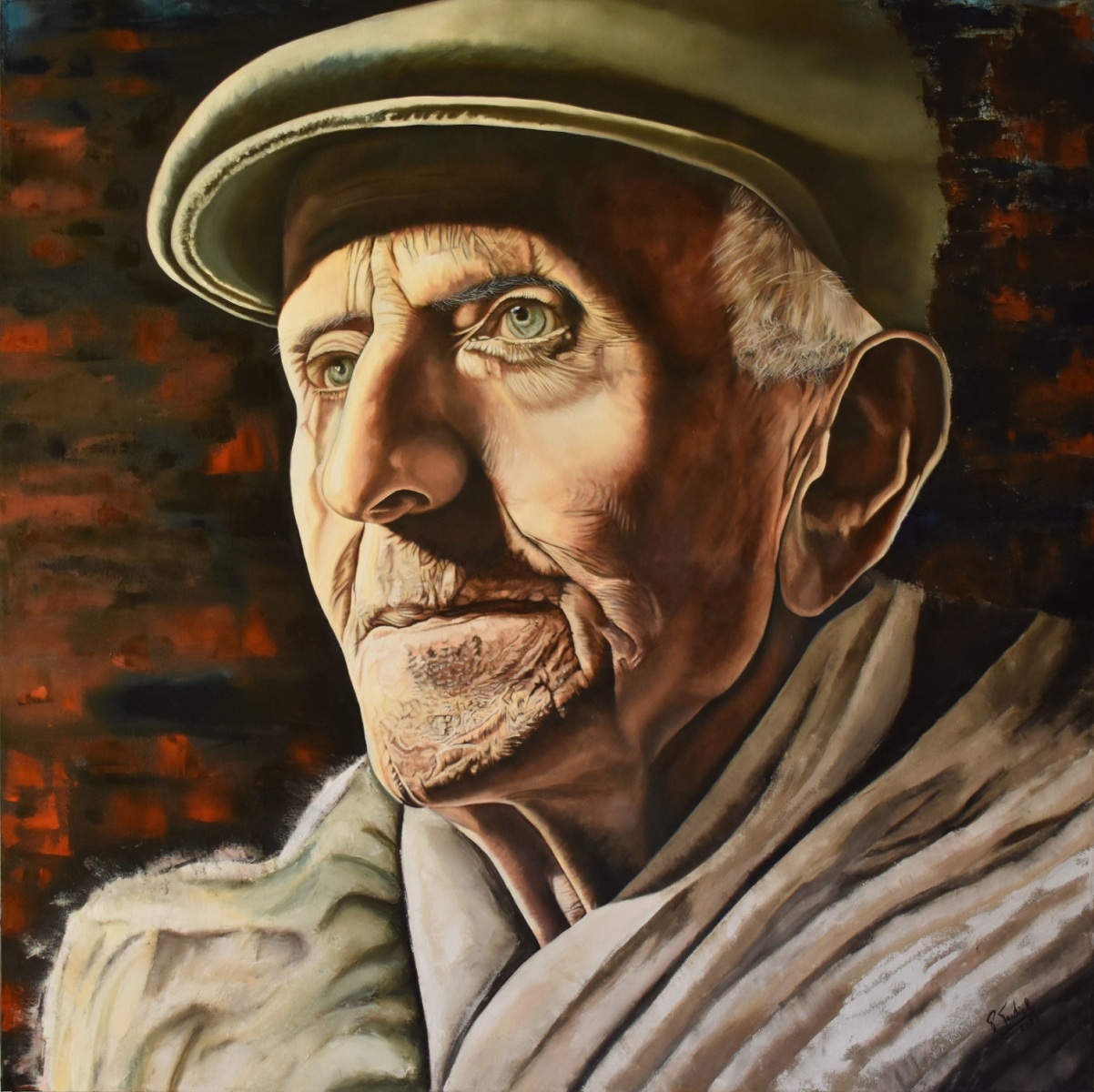
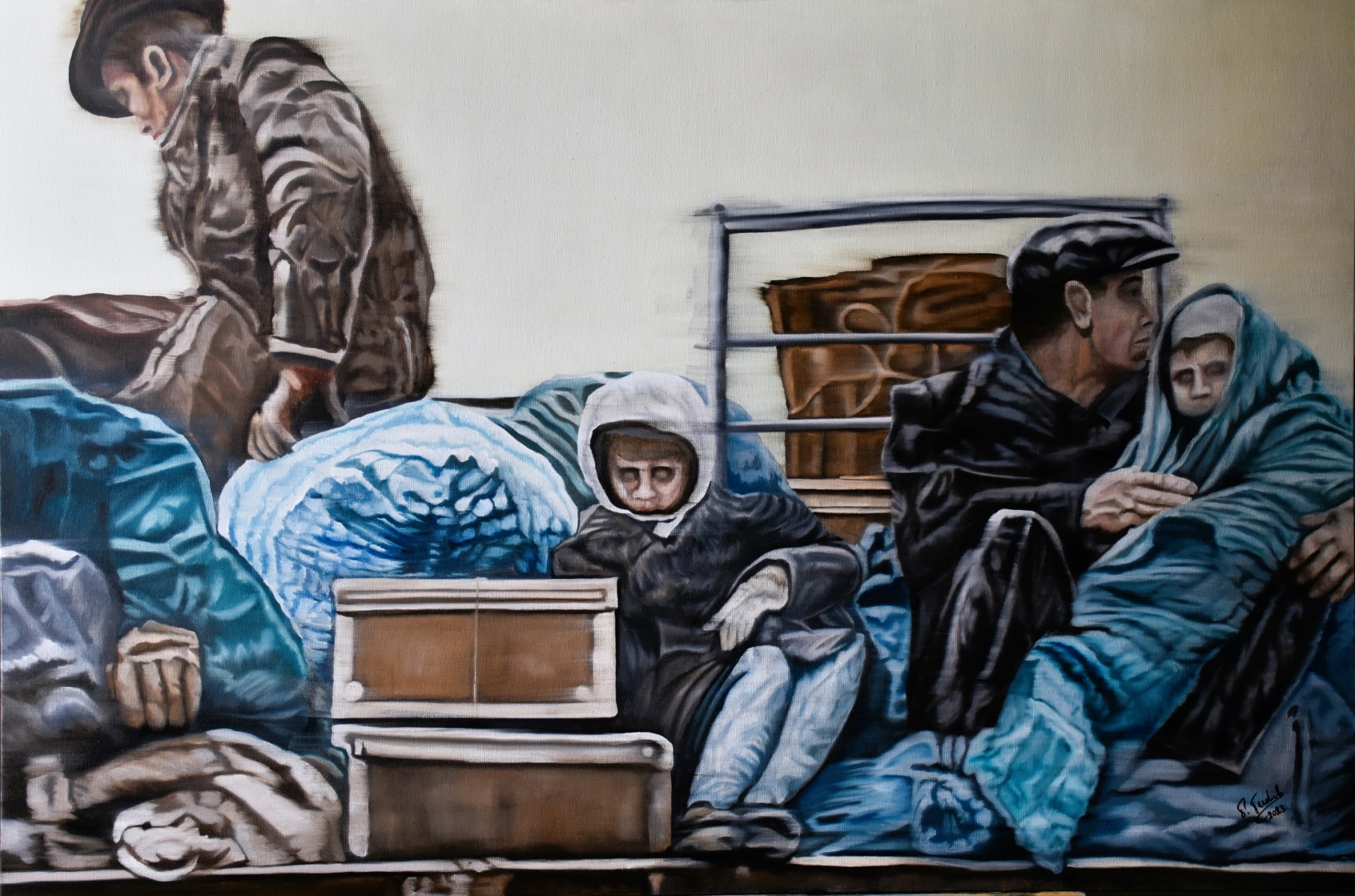
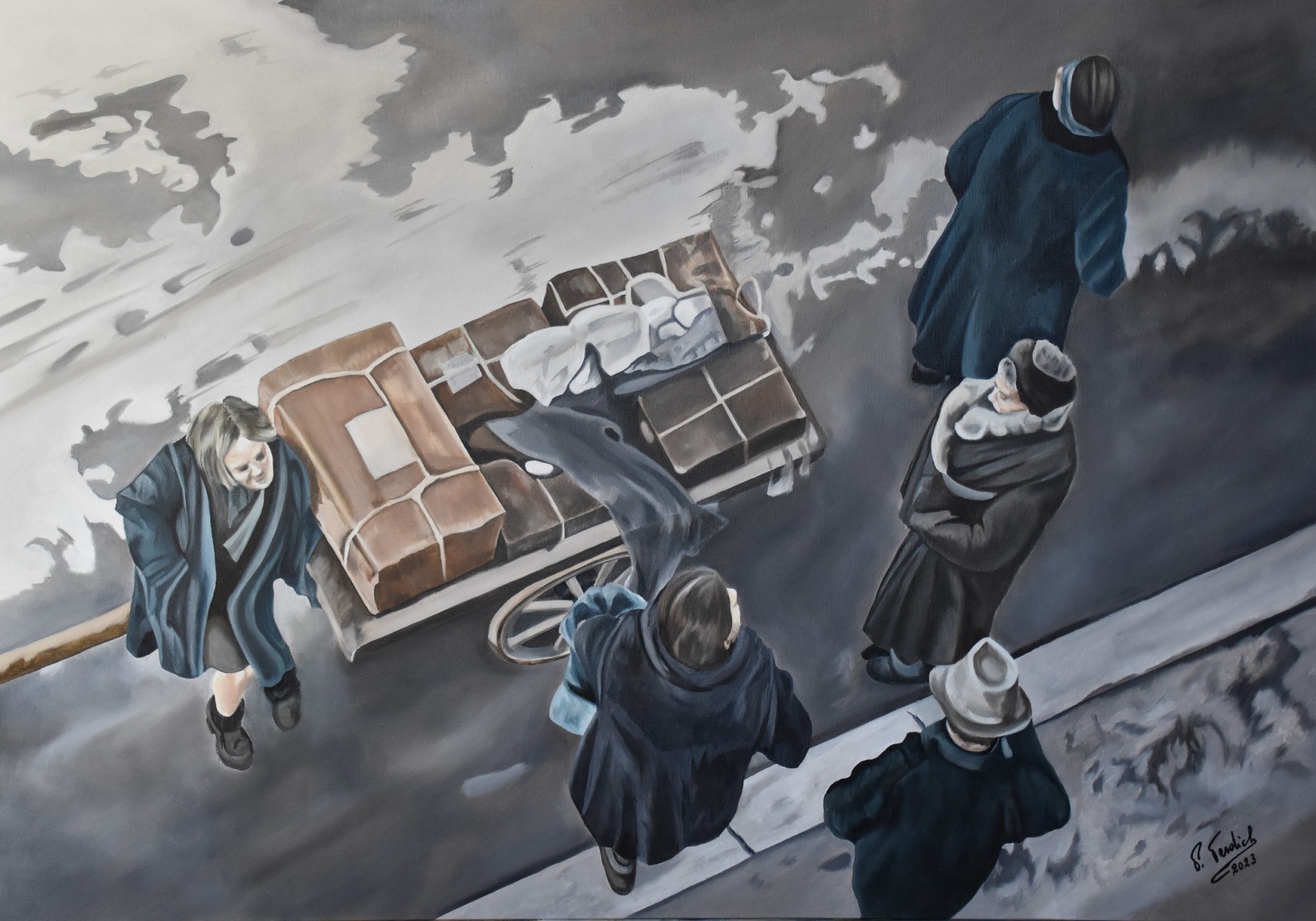
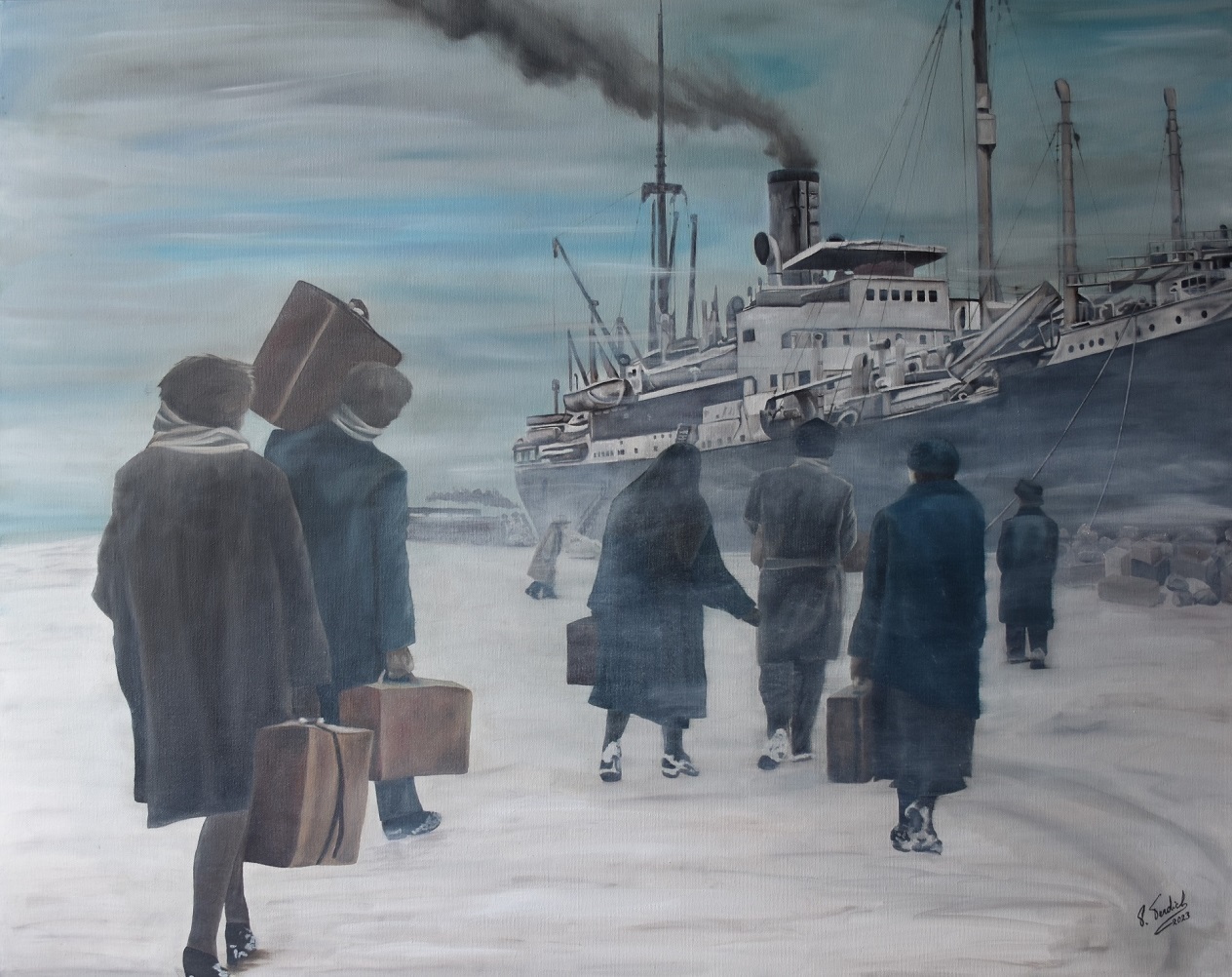
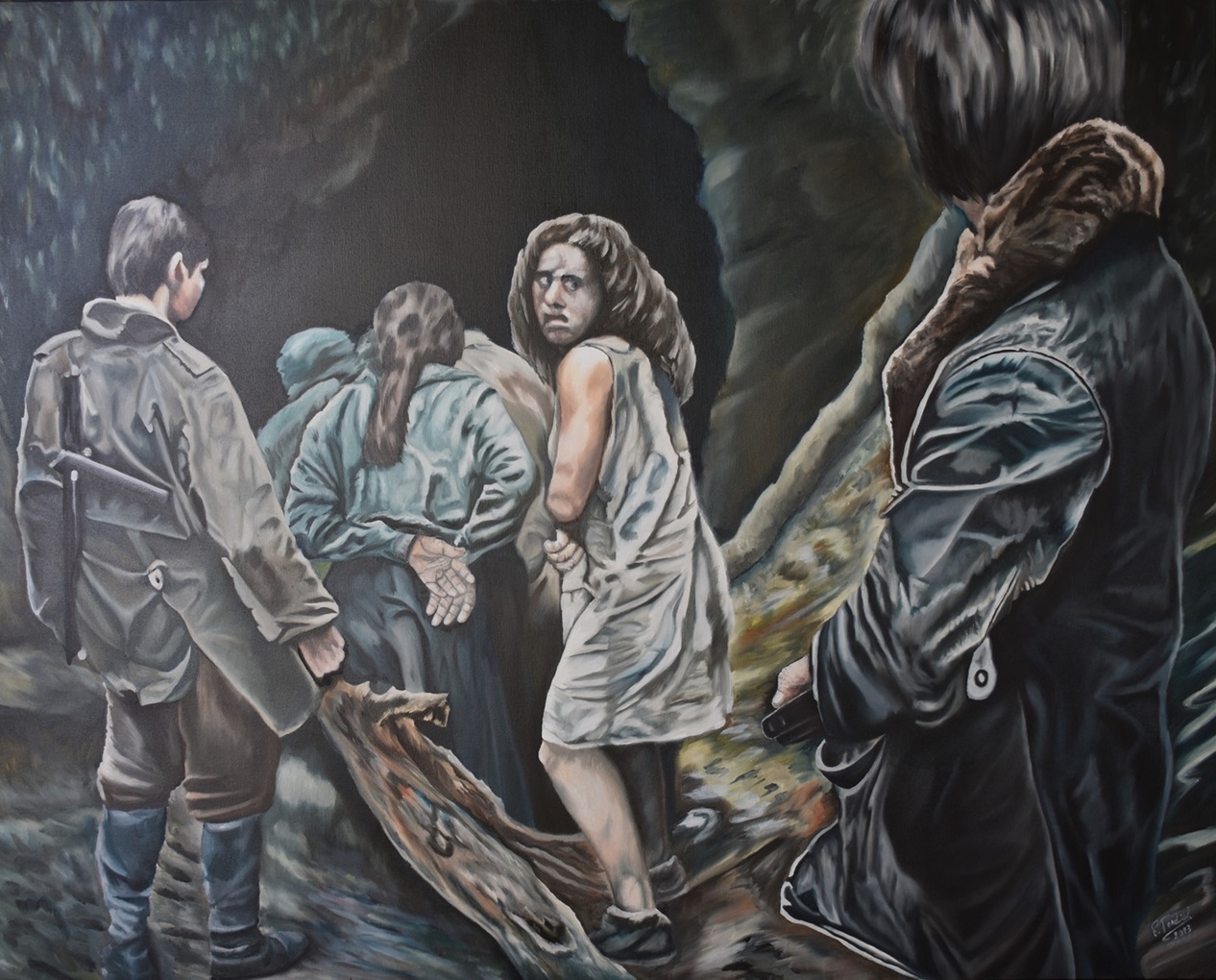
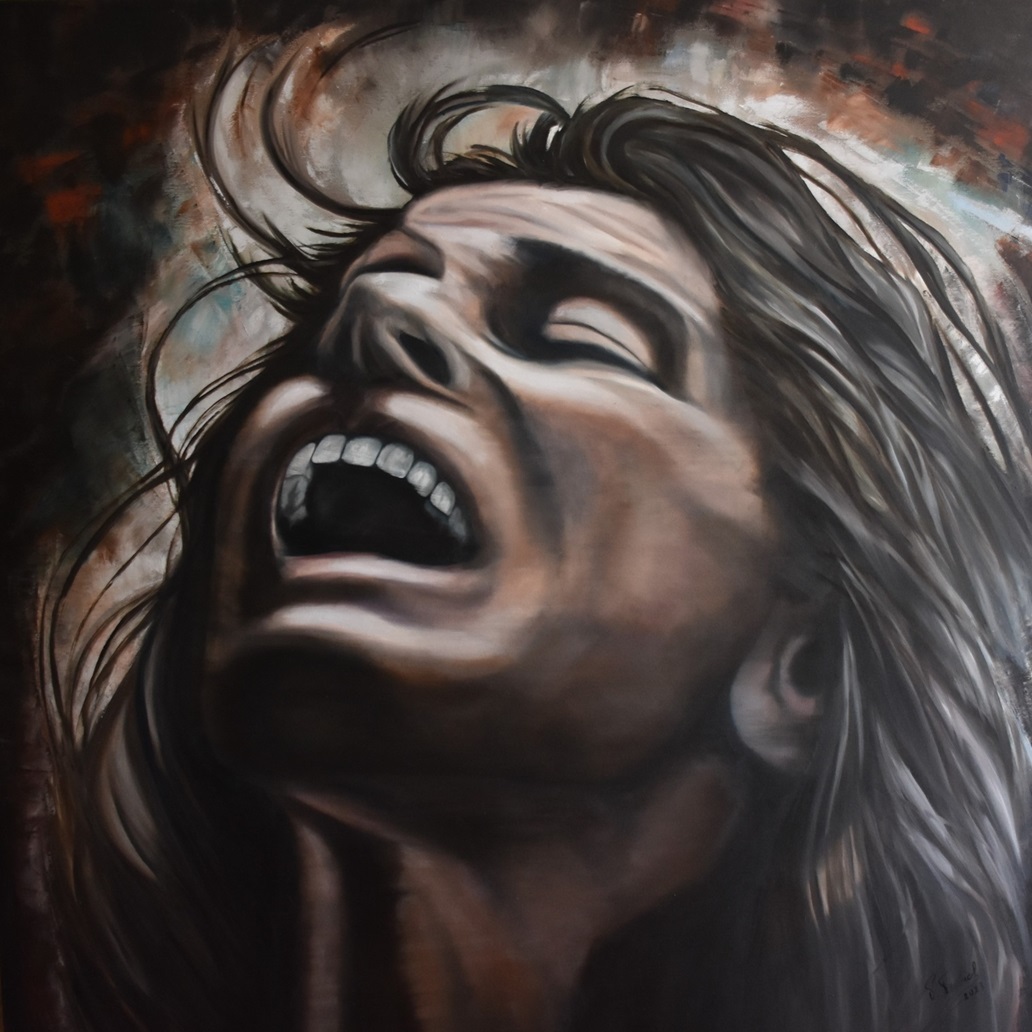
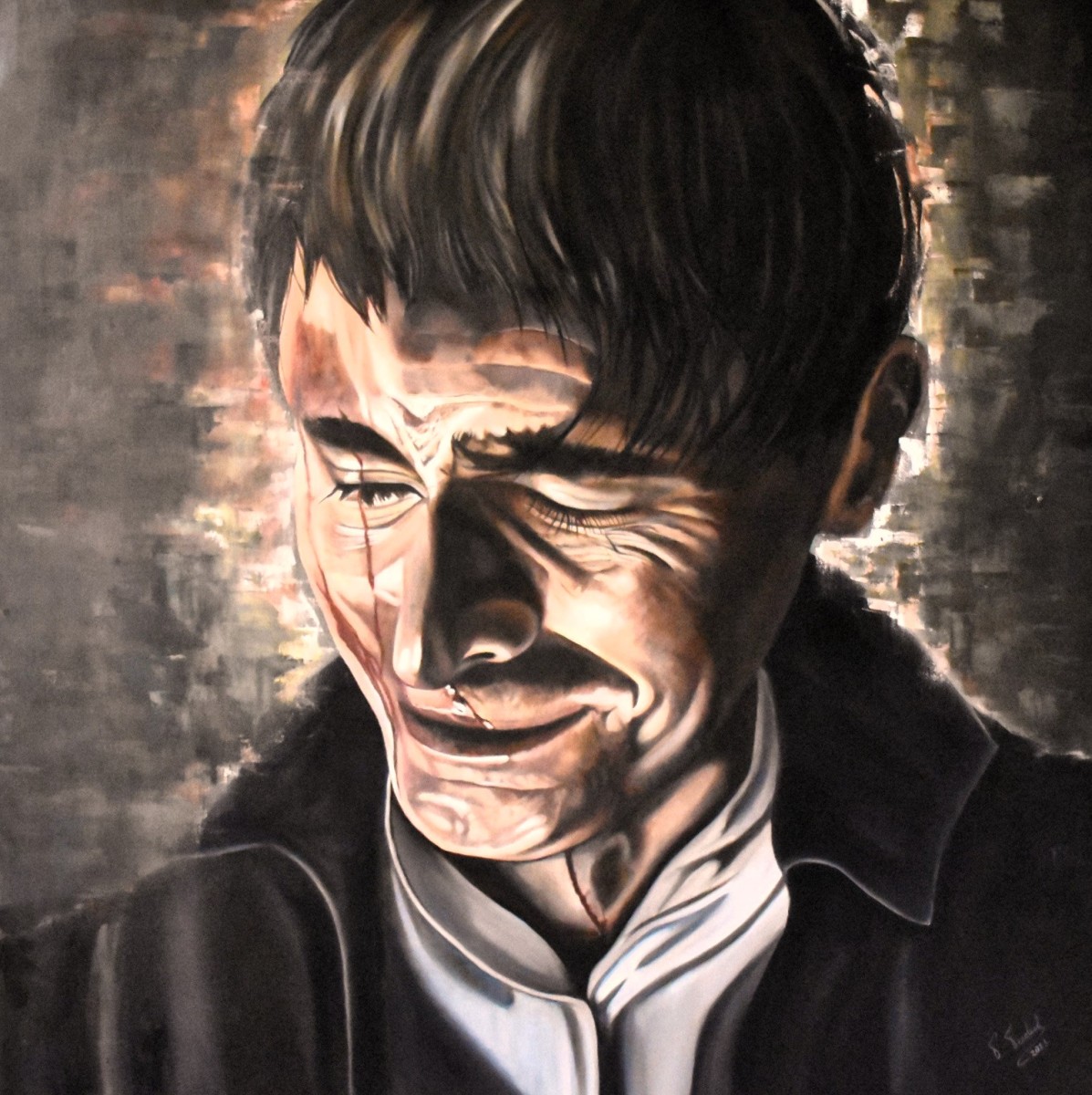
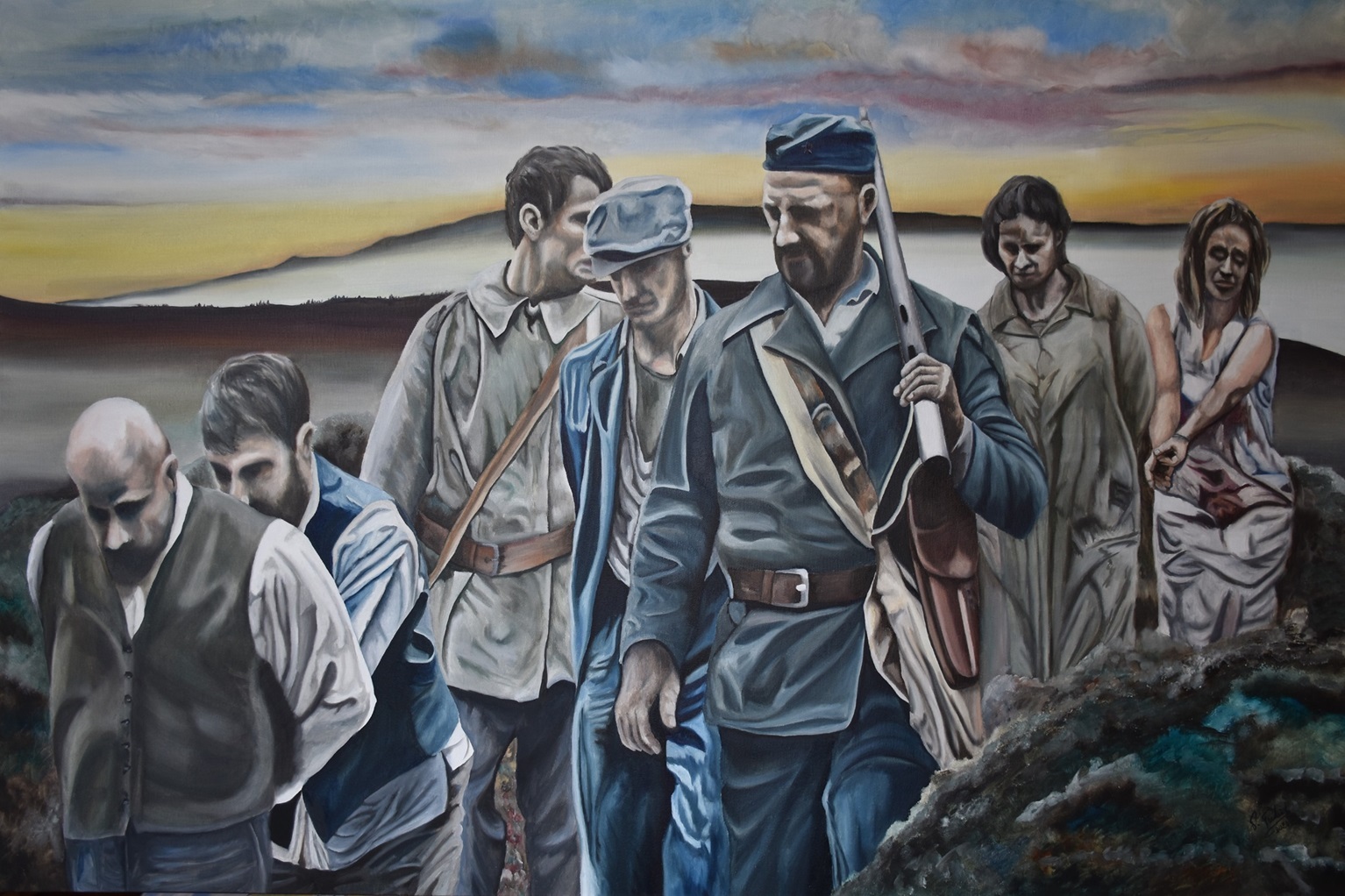
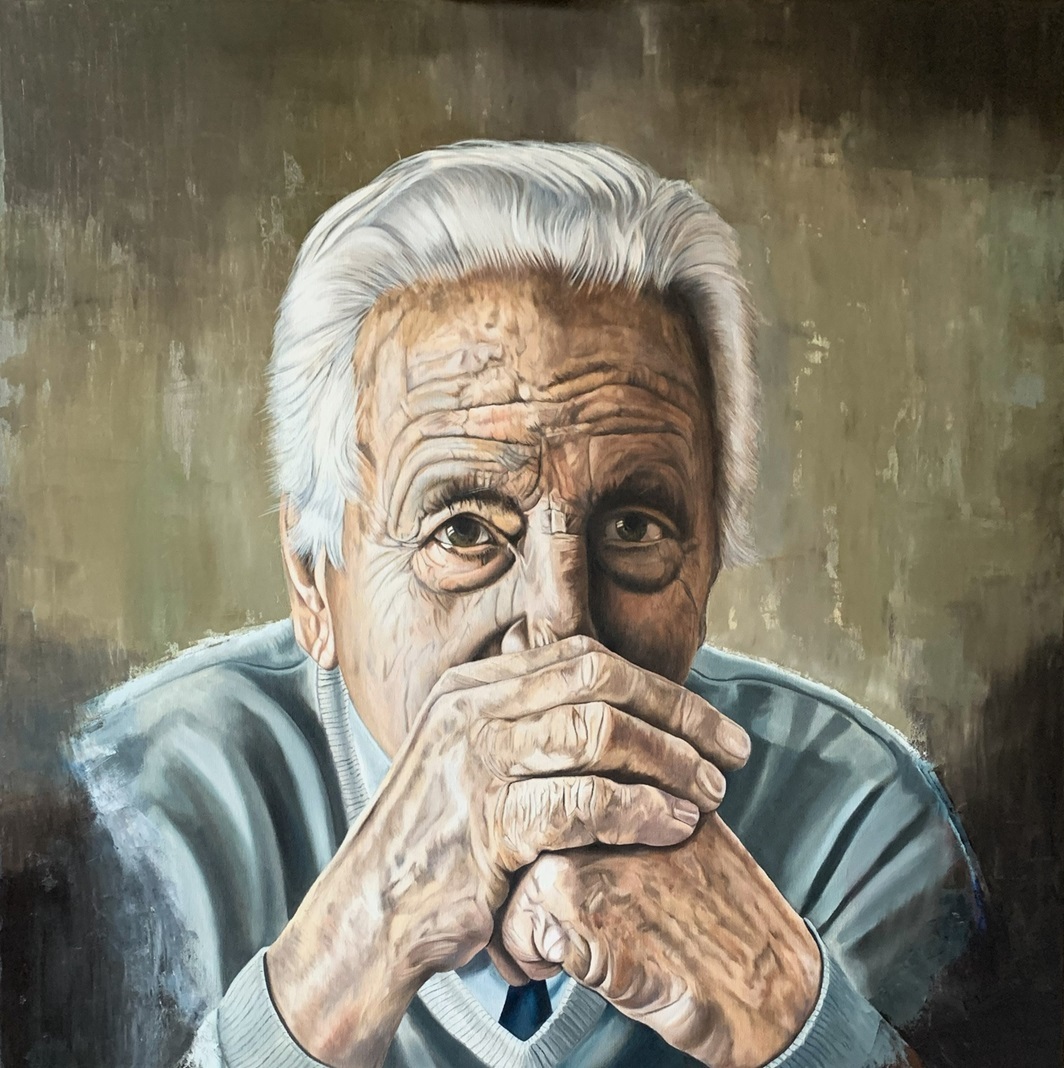
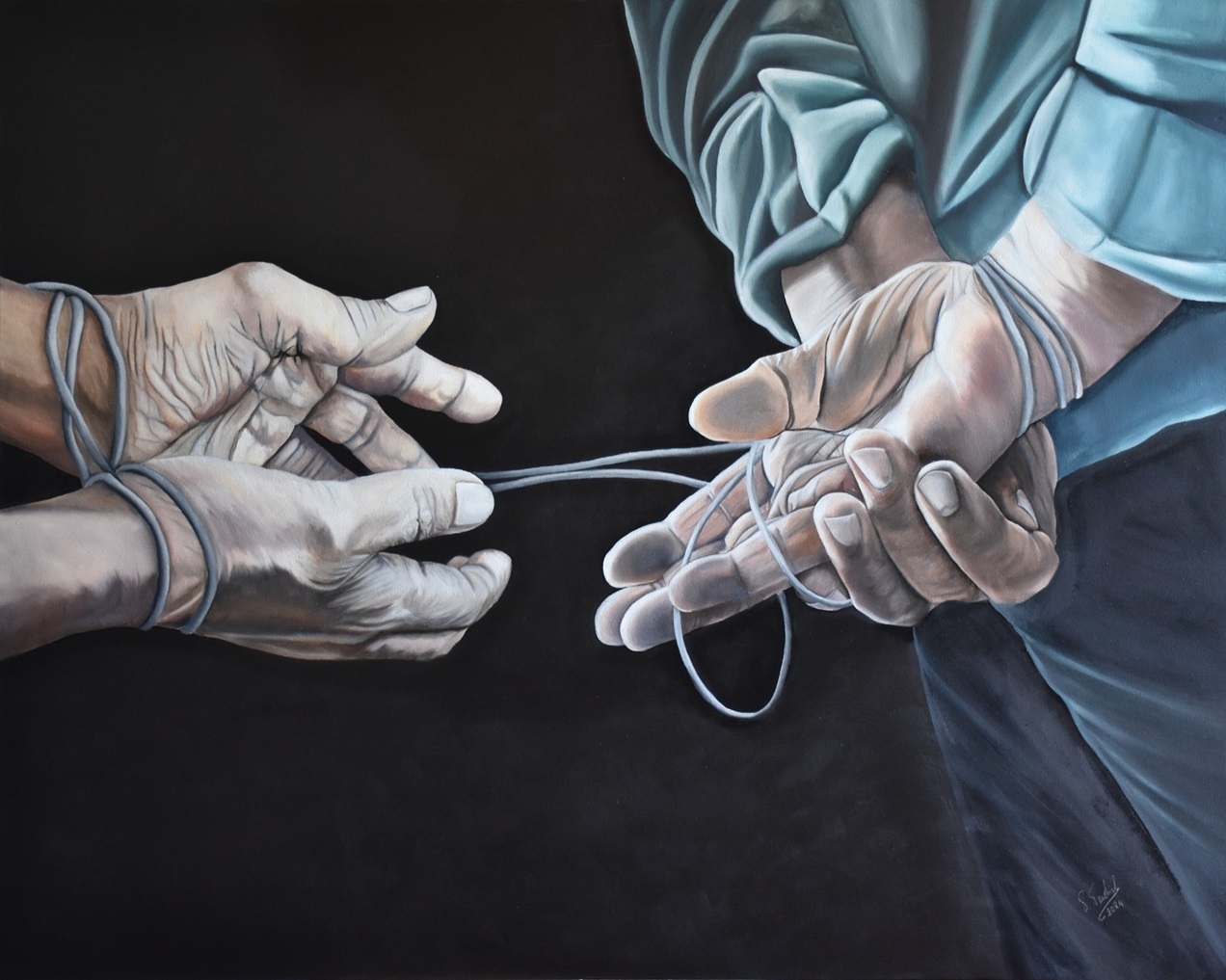
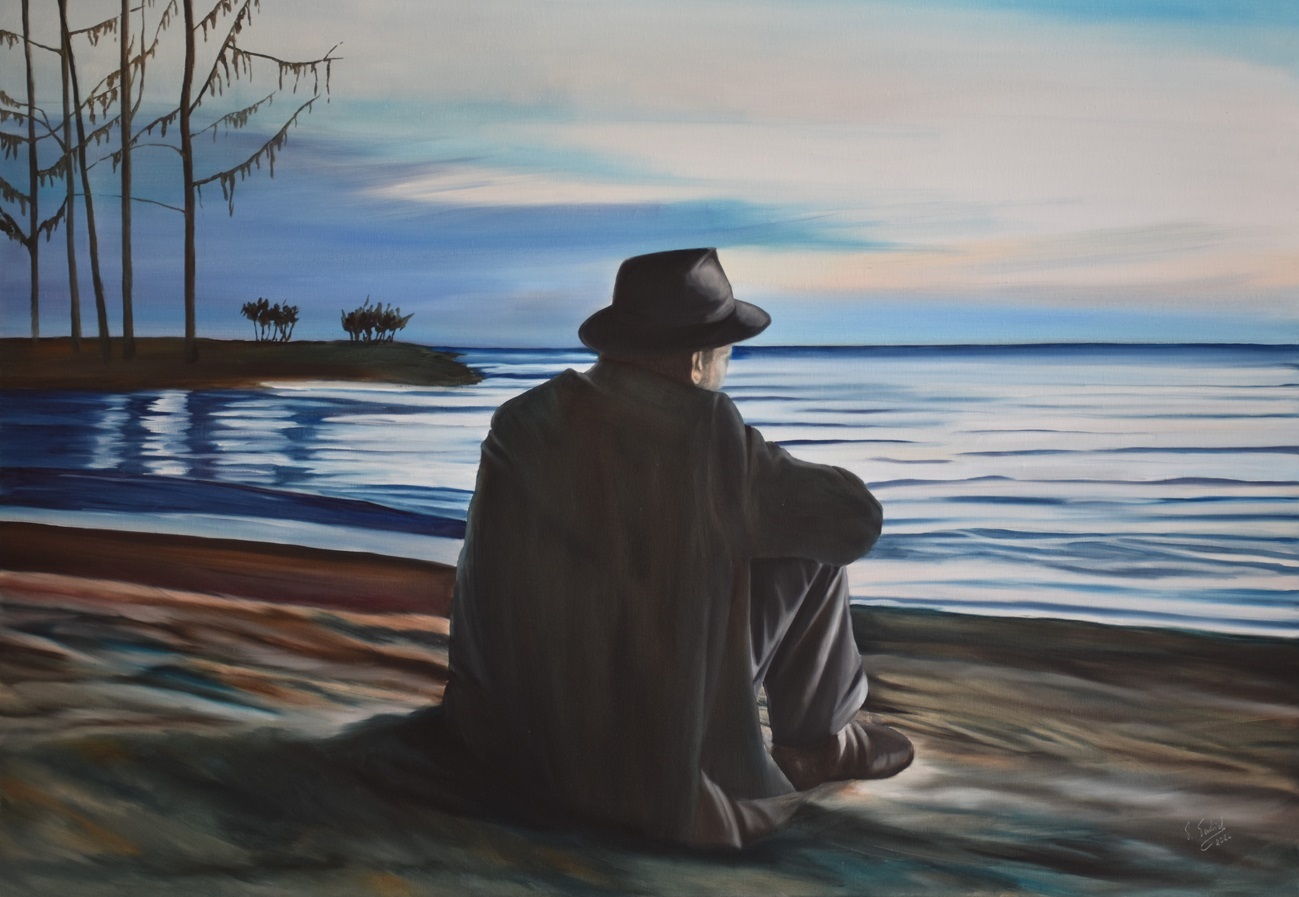
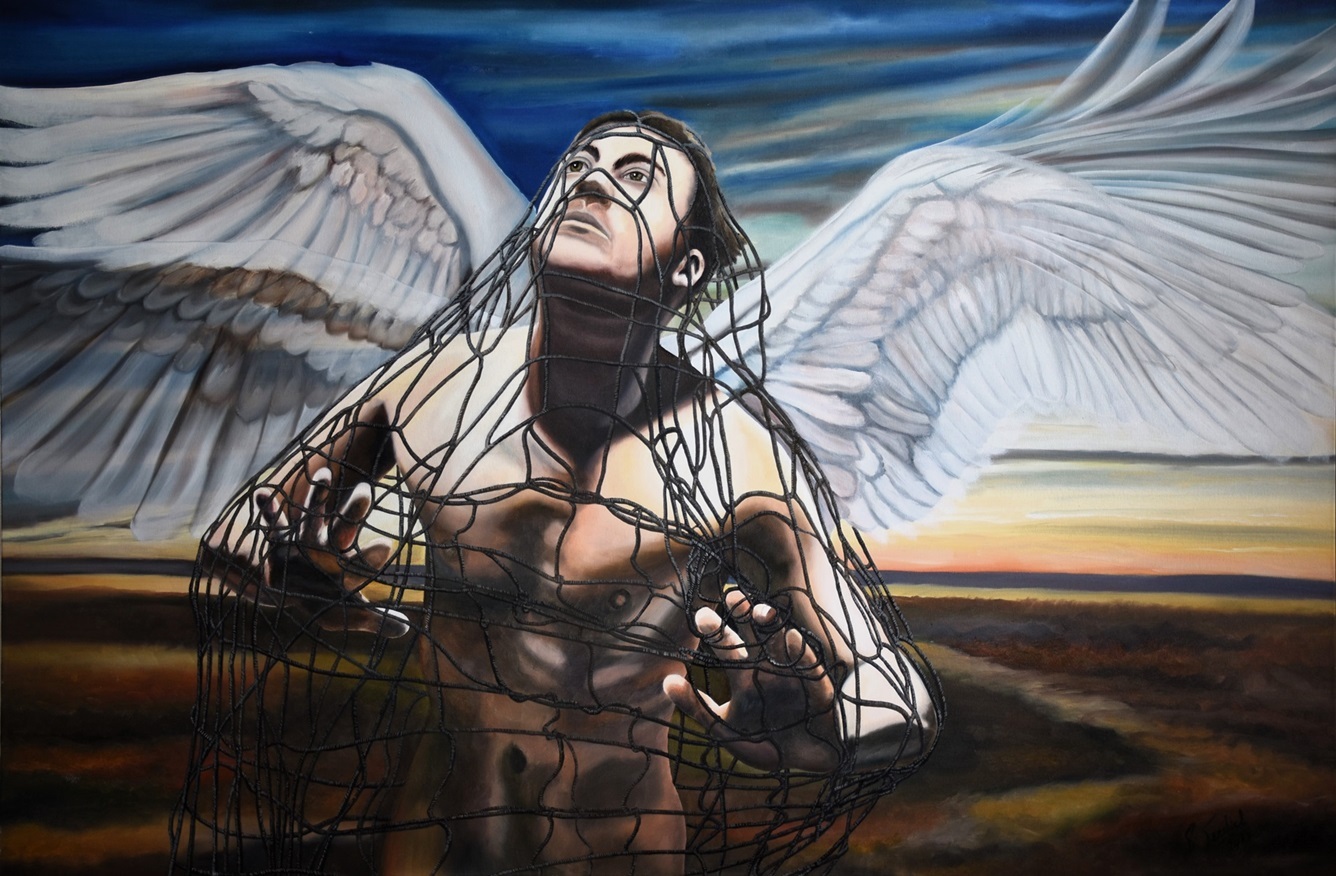
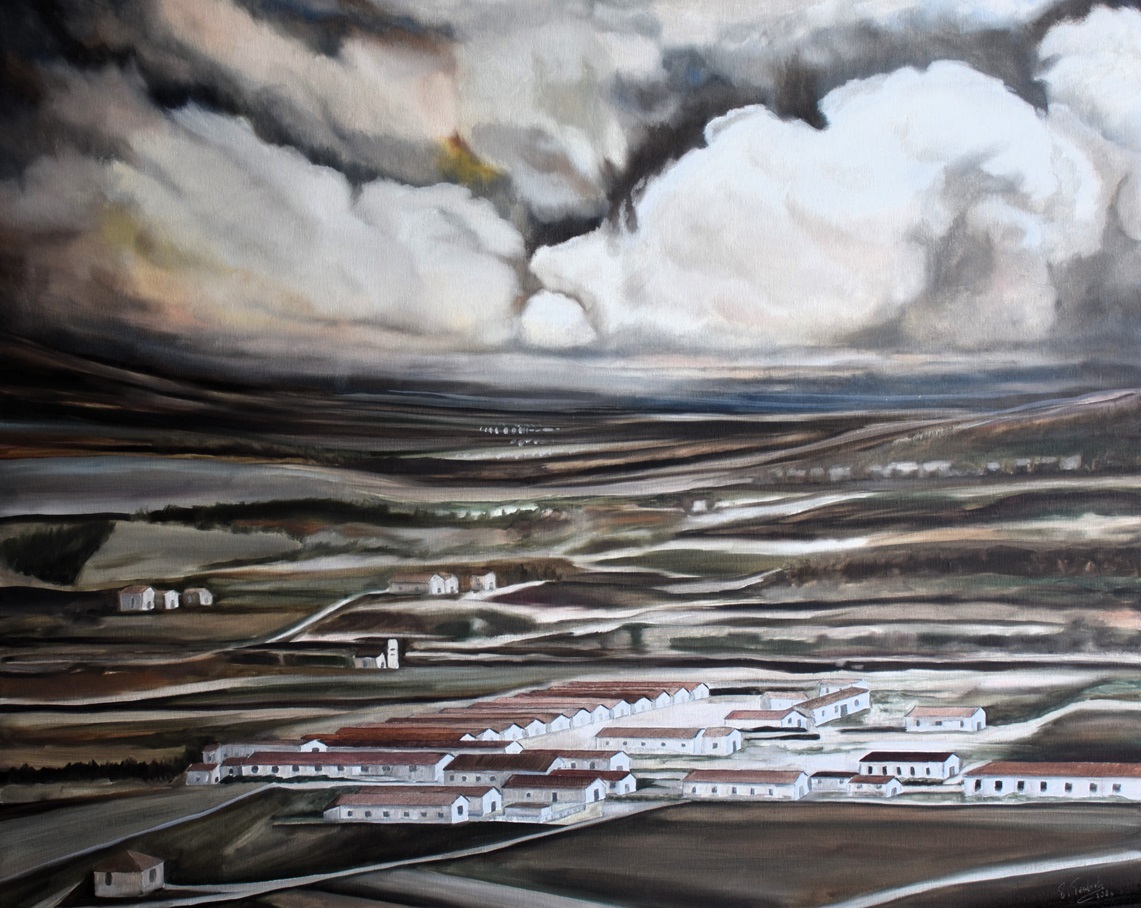
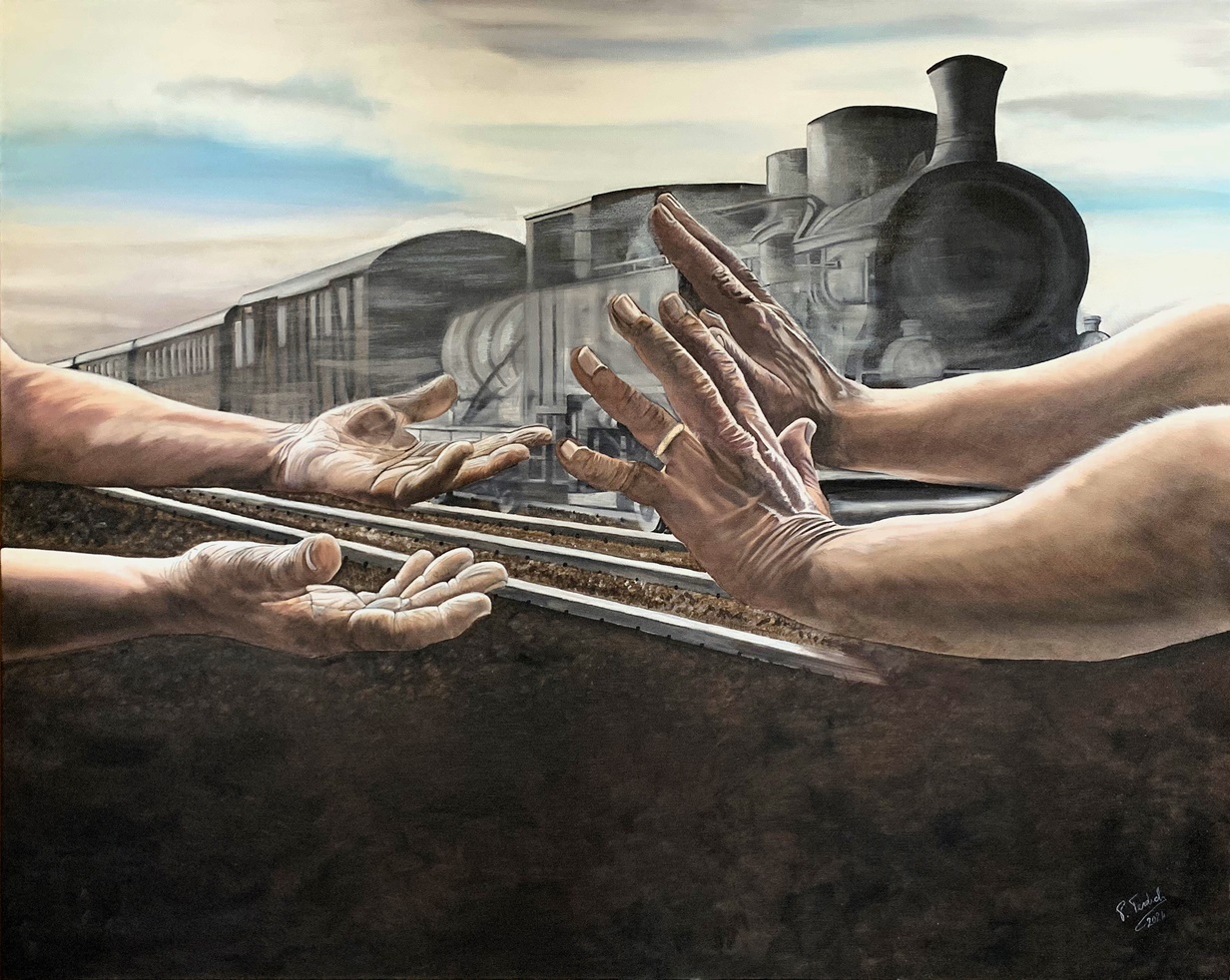
The artworks from the “Esodo” art project are designed to be displayed in various exhibitions to increase awareness of the sorrowful historical events narrated.
Most of the paintings are available for purchase, but their availability is required for future exhibitions of the “Exodus” project in prestigious venues.
The art project “Esodo” represents an unprecedented expressive form dedicated to remembering the tragedy of the Foibe massacres and the mass exodus that profoundly affected the Italian populations of Fiume, Istria, Venezia Giulia, and Dalmatia at the end of the Second World War.
Though I did not live through these events, I have inherited their emotional weight: unspoken sorrows, fragmented stories, and a profound sense of uprootedness. These legacies have quietly shaped my identity and artistic language. For decades, this history remained obscured by silence, political discomfort, and collective amnesia. Esodo does not aim to document, but to reveal, through painting, an emotional truth that resists linear narrative. It is not a historical account, but a deeply personal and symbolic act of remembrance. Through a fusion of surreal realism and metaphysical intensity, I explore themes of exile, fear, dislocation, and the fragile search for belonging. Figures emerge in suspended, dreamlike spaces where the human gesture becomes central. Hands—outstretched, entwined, reaching—embody trauma and tenderness, loss and hope. They are echoes of memory, signs of survival. Esodo stands apart as both an intimate reckoning and a public invocation. It confronts a neglected chapter of Italian history while speaking more universally to the condition of displacement and the quiet dignity of those who endure it. In this context, painting becomes a threshold—a bridge between generations, between private grief and collective memory. This project is a call to remember—not through nostalgia, but through empathetic attention. To keep memory alive not by repeating the past, but by allowing it to transform us.
Solo exhibition “Esodo” at the Italian Chamber of Deputies, in Vicolo Valdina Complex, Roma.
The President of the Chamber of Deputies, Lorenzo Fontana, hosted the solo exhibition “Esodo” in the prestigious Vicolo Valdina Complex at the Italian Chamber of Deputies in Rome.
“Memory must not be merely the exercise of remembrance, but a concrete commitment to ensuring that the pain of the past becomes awareness for the future.” With these words, President Lorenzo Fontana inaugurated the exhibition “Exodus. Lest We Forget. In memory of the Foibe massacres and the Julian-Dalmatian exodus.” The initiative, promoted on the occasion of the National Remembrance Day, was described by President Fontana as “a rightful tribute to the victims of a collective tragedy that must never be forgotten.” He further emphasized that it stands as “a strong and enduring warning against the horrors of war,” expressing hope that this commemoration may help enrich the civic consciousness of the nation.
Art critic Alberto Moioli also highlighted the power of art to recount tragic events without diminishing its evocative strength. “We can speak of beauty even when art addresses dramatic facts: these works are not mere aesthetic exercises, but profound reflections that lead us to grow,” Moioli remarked.
In his address, Federico Mollicone, Chairman of the Culture Committee of the Chamber of Deputies, reaffirmed the importance of initiatives such as this in honoring the memory of the victims of the Foibe massacres and the exiles. “Remembrance is a duty of truth and justice. These works capture the anguish of a tragedy that has been forgotten for far too long,” he declared, announcing that the Train of Remembrance, which made a stop in Rome on February 16th and 17th, would continue this path of historical awareness — using the image of the painting “Accoglienza?” to promote the initiative.